



Quick Answer
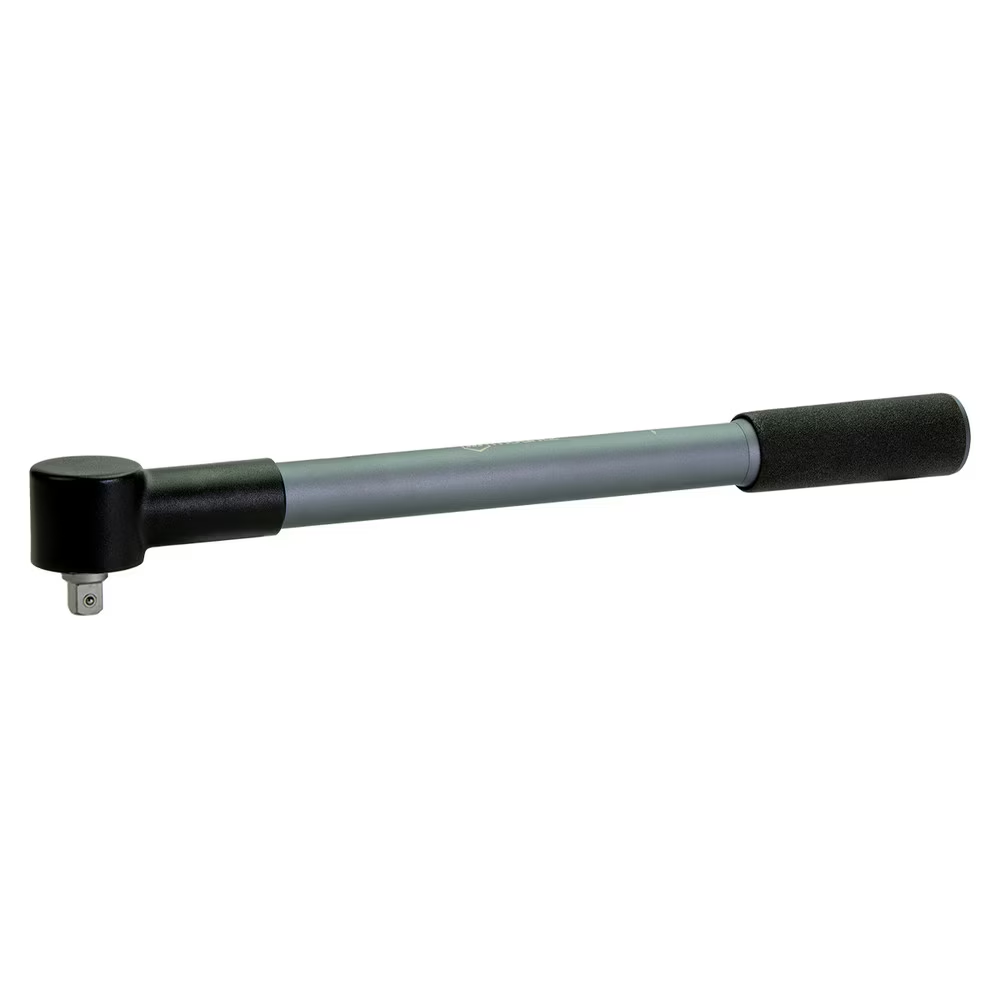
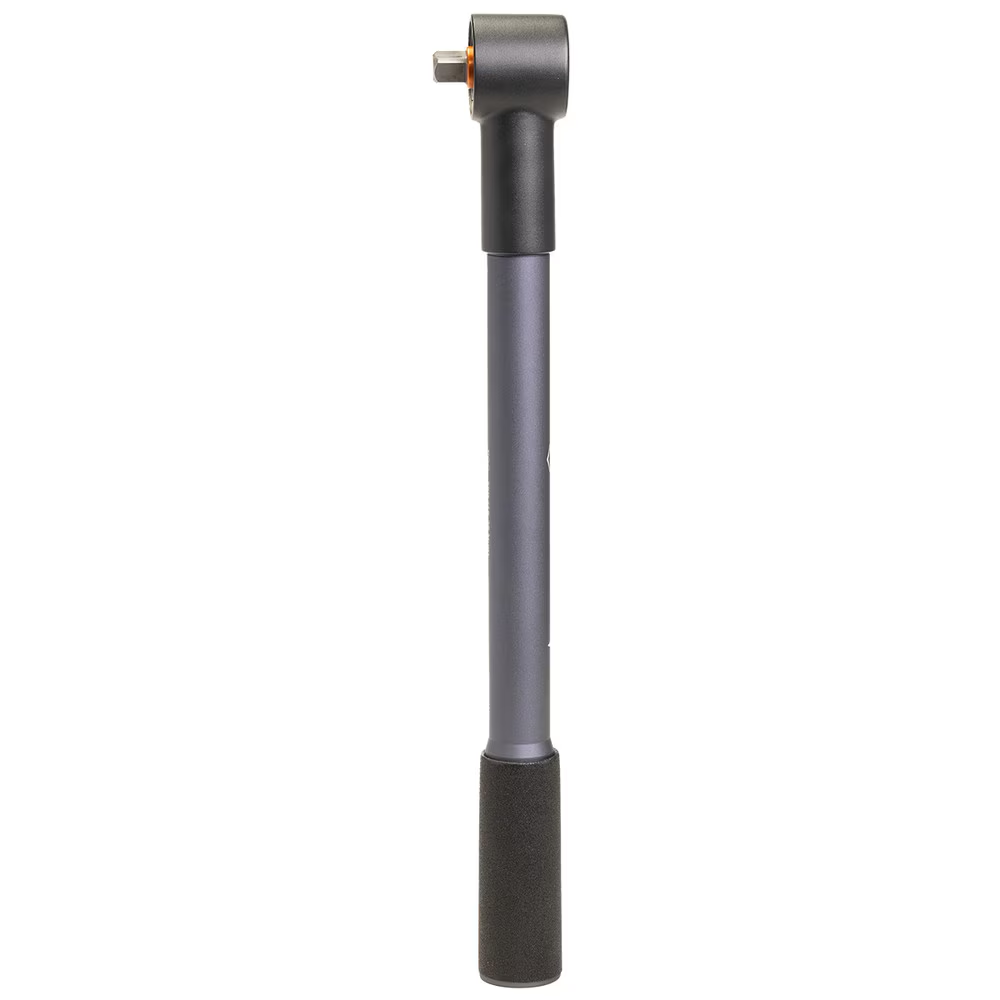
An FGC cam-over torque wrench is a preset torque tool that prevents over-tightening by physically stopping torque at a fixed value, ensuring consistent and repeatable fastening in production environments.
Who This Is For
- Manufacturing and assembly operators
- Quality and process engineers
- Maintenance teams
- Production managers evaluating torque tools
When Should You Use This?
Use FGC Cam-Over Torque Wrenches when:
- Torque must remain fixed and tightly controlled
- You are working within moderate to higher torque ranges
- Multiple operators need to achieve consistent results
- Over-tightening could damage components or compromise quality
- You require repeatable torque in production or assembly environments
Should You NOT Use This?
Do not use FGC cam-over torque wrenches if:
- Torque values need to change frequently → use an adjustable torque wrench
- Torque data capture or traceability is required → use a digital or transducerized system
- Applications are low-frequency or for general maintenance → use a click-type torque wrench
- The required torque is outside the FGC operating range → select a tool designed for that torque range
- Process control is not critical → a standard adjustable tool may be sufficient
How does the Cam-Over mechanism work?
- Internal cam disengages at preset torque
- Tool “slips” or “breaks”
- Prevents additional force from being applied
Result:
No over-torque, no guesswork.
Core Features
- Physically disengages at the preset torque to prevent additional force and eliminate over-tightening.
- Internal torque adjustment ensures the tool stays fixed at the required value, preventing unauthorized changes.
- Delivers consistent torque (±4%) across repeated cycles, supporting quality-controlled assembly processes.
- Designed for up to 10,000 cycles before recalibration, reducing downtime and maintenance costs.
- Poka-Yoke (Error-Proofing) Design. Minimizes operator influence, ensuring consistent results regardless of user experience.
Available Models
The FGC Series is available in seven model configurations covering torque ranges from 1–75 N·m (8.9 lbf.in to 55.3 lbf.ft).
Available models include:
- FGC-5
- FGC-10D
- FGC-10A
- FGC-30D
- FGC-30A
- FGC-75A
- FGC-75B
Each model is supplied preset to a single torque value specified by the customer at the time of ordering. The published torque range indicates the available preset values that can be selected for that model.
FGC-Series Models
The FGC Series consists of preset cam-over torque wrenches designed for production, assembly, maintenance, and quality-critical fastening applications. Each model represents a torque wrench family that can be preset to a specific torque value within its available torque range.
Unlike adjustable torque wrenches, each FGC wrench is supplied preset to a single torque value selected at the time of ordering.
How FGC Models Are Specified
Each FGC model represents a torque wrench family capable of being preset to a range of torque values.
The published range indicates the available torque settings that can be specified when ordering.
Example:
The FGC-30A has an available torque range of 6–30 N·m.
If your application requires 20 N·m, you would order an FGC-30A preset to 20 N·m.
Each wrench is supplied preset to one torque value within its specified range.
FGC Torque Range Lineup
1 N·m → 75 N·m
FGC-5
[1 ─────────────── 5]
FGC-10D / FGC-10A
[2 ──────────────────────── 10]
FGC-30D / FGC-30A
[6 ─────────────────────────────────────────── 30]
FGC-75A / FGC-75B
[15 ──────────────────────────────────────────────── 75]
Model Selection Guide
Need a preset torque between 1–5 N·m?
Choose:
- FGC-5
Need a preset torque between 2–10 N·m?
Choose:
- FGC-10D (1/4" Square Drive)
- FGC-10A (3/8" Square Drive)
Need a preset torque between 6–30 N·m?
Choose:
- FGC-30D (1/4" Square Drive)
- FGC-30A (3/8" Square Drive)
Need a preset torque between 15–75 N·m?
Choose:
- FGC-75A (3/8" Square Drive)
- FGC-75B (1/2" Square Drive)
Need a tool for small fasteners or limited-access applications?
Choose:
- FGC-5
- FGC-10D
- FGC-30D
These models utilize a 1/4" square drive and are typically used for smaller fasteners, electronics assembly, precision mechanical assemblies, and limited-access applications.
Need a general-purpose production torque wrench?
Choose:
- FGC-10A
- FGC-30A
- FGC-75A
These 3/8" square drive models are well suited for manufacturing, assembly, maintenance, and general fastening applications.
Need higher torque capacity?
Choose:
- FGC-75B
The FGC-75B features a 1/2" square drive and supports torque settings up to 75 N·m.
Model Specifications
| Model | Part Number | Available Torque Range (N·m) | American Units | Metric Units | Drive Size |
|---|---|---|---|---|---|
| FGC-5 | 076565 | 1–5 N·m | 8.9–44.2 lbf.in | 10.2–51 kgf.cm | 1/4" Square Drive |
| FGC-10D | 076566 | 2–10 N·m | 17.7–88.5 lbf.in | 20.4–102 kgf.cm | 1/4" Square Drive |
| FGC-10A | 076567 | 2–10 N·m | 17.7–88.5 lbf.in | 20.4–102 kgf.cm | 3/8" Square Drive |
| FGC-30D | 076568 | 6–30 N·m | 4.4–22.1 lbf.ft | 0.6–3.1 kgf.m | 1/4" Square Drive |
| FGC-30A | 076569 | 6–30 N·m | 4.4–22.1 lbf.ft | 0.6–3.1 kgf.m | 3/8" Square Drive |
| FGC-75A | 076570 | 15–75 N·m | 11.1–55.3 lbf.ft | 1.5–7.6 kgf.m | 3/8" Square Drive |
| FGC-75B | 076572 | 15–75 N·m | 11.1–55.3 lbf.ft | 1.5–7.6 kgf.m | 1/2" Square Drive |
Choosing the Correct Drive Size
1/4" Square Drive
Recommended for:
- Small fasteners
- Electronics assembly
- Precision mechanical assemblies
- Limited-access applications
Models:
- FGC-5
- FGC-10D
- FGC-30D
3/8" Square Drive
Recommended for:
- General assembly
- Manufacturing operations
- Maintenance applications
- Medium torque fastening
Models:
- FGC-10A
- FGC-30A
- FGC-75A
1/2" Square Drive
Recommended for:
- Larger fasteners
- Heavy-duty assembly
- Industrial maintenance
- Higher torque applications
Models:
- FGC-75B
Which FGC Model Should I Select?
Start with these questions:
- What torque value is required?
- What socket drive size is needed?
- Is the application production assembly, maintenance, or quality control?
- Is preventing unauthorized torque adjustment important?
- Are multiple operators using the tool?
- Is process consistency a critical requirement?
- Are larger fasteners or higher torque values involved?
The answers to these questions will help determine the appropriate FGC-Series model for the application.
Setup & Adjustment
Option 1: Factory Preset
FGC torque wrenches can be ordered preset to a specific torque value within the model's available torque range.
The tool arrives calibrated and ready for use at the specified torque setting.
Option 2: Internal Adjustment
Torque settings can be adjusted internally by authorized personnel using the appropriate adjustment procedure and verified with a torque analyzer.
After adjustment, torque output should always be verified before placing the tool into service.
How to Use an FGC Torque Wrench
- Verify the preset torque value is appropriate for the application.
- Install the correct socket or accessory.
- Position the wrench on the fastener.
- Apply smooth, steady force.
- Continue tightening until the wrench cams over.
- Stop applying force once the cam-over action occurs.
The cam-over mechanism provides a clear tactile indication that the preset torque has been reached and helps prevent additional torque from being applied.
Can Torque Be Changed Later?
Yes.
FGC torque wrenches can be readjusted and recalibrated if application requirements change.
Adjustments should be verified using a torque analyzer or performed by a qualified calibration laboratory.
Decision Guide
FGC vs Other Options
Use FGC when:
- Need over-torque prevention
- Want a mechanical signal indicating the torque was reached
- Require very high torque consistency
Move to other tools when:
- FG Standard: Higher torque needed
- Adjustable: Torque changes frequently
- Smart Tools (ECT/EPT): Data tracking required
Use Cases (Real-World Examples)
1. Automotive Assembly
Problem: Over-tightened fasteners causing failures
Solution: FGC prevents over-torque, ensuring consistent fastening
2. Electronics Manufacturing
Problem: Low torque precision required
Solution: FGC delivers repeatable, accurate torque without damage
3. Aerospace Assembly
Problem: Strict compliance and quality standards
Solution: FGC ensures controlled torque and process reliability
Troubleshooting
Issue 1: Tool is not cam-overing
Cause: Calibration issue or internal wear
Solution: Verify calibration with torque analyzer
Issue 2: Tool feels inconsistent
Cause: Improper technique or misalignment
Solution: Apply steady force and ensure correct positioning
Issue 3: Suspected calibration drift
Cause: High cycle usage
Solution: Recalibrate tool immediately
Issue 4: Fastener issues (loosening or damage)
Cause: Incorrect torque setting or misuse
Solution: Confirm torque value and operator technique
Issue 5: Tool not performing reliably
Cause: Wear or damage
Solution: Remove from service and inspect
Calibration & Standards
FGC tools follow International Organization for Standardization ISO 6789-1:2017:
- Recalibrate every 10,000 cycles, or
- Based on internal quality requirements
Integration / Advanced Notes
- No PLC or MES integration (manual tool)
- No data capture or traceability
- Depends on proper calibration program
- Risk: Incorrect torque setting without analyzer verification
Media & Supporting Content
Related Content / Articles
- FGC Product Brochure
- FAQ for FGC Preset Cam-Over Wrenches
- Webinar - 3 Ways to Prevent Over-Torque Failures with Cam-Over Wrenches
- White Paper - Mountz Torque Click vs Cam-Over Wrench
- Torque Wrenches Comparison Chart
Need Help?
- Contact Applications Engineering for setup guidance
- Speak with Sales for product selection
- Call us:
- North America:(408) 850-9978
- International: +44 1428 741756


 M-F 6am - 5pm PST


