



Quick Answer
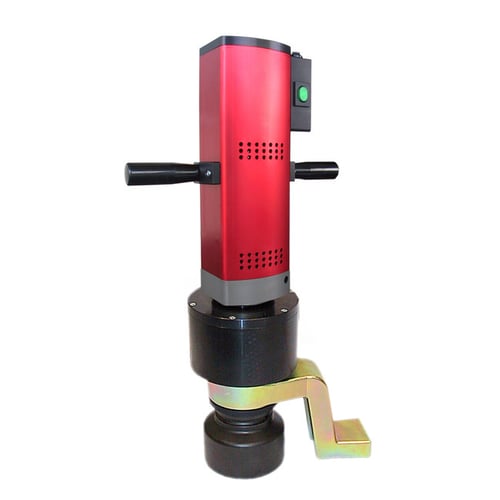
EF Electric Torque Multipliers are designed for precision tightening and loosening of heavy-duty fastening connections. The tools use a brushless electric motor and built-in controller to provide smooth, continuous, non-impacting rotation and automatically shut off when the preset torque is achieved. Standard EF models feature an LED display, 19 selectable torque stages, universal AC input, overheat protection, and a free-floating or lockable handle. Available models cover an overall torque range of 118–7,228 lbf.ft (160–9,800 N·m) with 3/4-inch, 1-inch, and 1½-inch square drives.
Who This Is For
- Manufacturing engineers
- Maintenance technicians
- Field service technicians
- Heavy equipment manufacturers
- Wind energy assembly and maintenance teams
- Oil and gas operations
- Industrial maintenance departments
- Production facilities performing high-torque bolting
- Applications requiring controlled, repeatable high-torque fastening
When Should You Use This?
Use an EF Electric Torque Multiplier when:
- High-torque fastening is required.
- AC electrical power is available.
- Precision tightening or loosening of heavy-duty fasteners is required.
- Smooth, continuous torque application is preferred.
- Automatic shut-off at the preset torque is needed.
- Impacting or hammering action is undesirable.
- Faster operation than slow-ratcheting hydraulic systems is beneficial.
- A self-contained electric tool with a built-in controller is preferred.
- Repetitive high-torque fastening is being performed.
- An inline multiplier configuration provides suitable access to the fastener.
Mountz states that its electric torque multipliers operate 5–10 times faster than slow-ratcheting hydraulic torque wrenches, helping increase productivity during heavy-duty fastening. Your original article included this same Mountz-supported comparison.
When Should You NOT Use This?
An EF Electric Torque Multiplier may not be the best choice when:
- Electrical power is unavailable.
- A pneumatic power source is preferred.
- The application requires a right-angle configuration for improved access.
- Torque requirements fall outside the available EF model ranges.
- A suitable reaction point cannot be established.
- The operating environment requires a different tool configuration.
- The tool would be used for something other than tightening or loosening threaded fasteners.
Mountz offers other torque multiplier configurations for applications where an inline electric multiplier is not appropriate.
How EF Electric Torque Multipliers Work
EF Electric Torque Multipliers use a brushless synchronized electric motor and built-in controller to apply controlled high torque to threaded fasteners.
During operation:
- Install the appropriate socket on the square drive.
- Install the reaction device.
- Position the reaction device against a secure reaction point.
- Connect the multiplier to the appropriate AC power supply.
- Select the required torque setting.
- Select the desired direction of rotation.
- Fully engage the socket with the fastener.
- Activate the tool.
- The multiplier rapidly runs down the fastener using smooth, continuous rotation.
- As the preset torque is approached, operating speed decreases.
- The tool automatically shuts off when the preset torque is achieved.
This combination of fast rundown, reduced final tightening speed, and automatic shut-off provides controlled torque application without the impact hammering associated with impact tools. These operating characteristics are also documented in the original article.
Result
- Controlled high-torque fastening
- Automatic shut-off at the preset torque
- Smooth, continuous rotation
- Non-impacting operation
- Faster heavy-duty bolting
- Repeatable torque application
- Built-in torque control
- No separate controller box required
Core Features
- Brushless synchronized electric motor
- Built-in microprocessor controller
- Automatic shut-off at preset torque
- Smooth, continuous, non-impacting rotation
- Reduced speed before final shut-off
- Accuracy better than ±5%
- Clockwise and counterclockwise operation
- LED torque display
- 19 selectable torque stages
- Overheat protection
- Universal power input: 100–253 VAC, 45–66 Hz
- Free-floating or lockable handle
- Inline configuration
- 3/4", 1", and 1½" square drive options
- Torque capacities up to 7,228 lbf.ft
- No external controller box required
- Reaction foot supplied
- Remote-control operation available
- All-weather configurations available
These core features align with the EF specifications captured in the original article.
EF Electric Torque Multiplier Models
EF Electric Torque Multipliers are available in models covering different torque capacities, square drive sizes, and operating speeds. Higher-capacity models generally operate at lower speeds.
Available Models
| Model | Item # | American Torque Range | S.I. Torque Range | Square Drive | Speed |
|---|---|---|---|---|---|
| EF100 | 210604 | 118–796 lbf.ft | 160–1,080 N·m | 3/4" | 33 RPM |
| EF200 | 210605 | 221–1,548 lbf.ft | 300–2,100 N·m | 1" | 16 RPM |
| EF250 | 210606 | 320–1,987 lbf.ft | 435–2,695 N·m | 1" | 14 RPM |
| EF300 | 210607 | 368–2,286 lbf.ft | 500–3,100 N·m | 1" | 12 RPM |
| EF400 | 210608 | 663–3,134 lbf.ft | 900–4,250 N·m | 1½" | 8 RPM |
| EF600 | 210609 | 811–4,536 lbf.ft | 1,100–6,150 N·m | 1½" | 7 RPM |
| EF800 | 210610 | 1,327–5,752 lbf.ft | 1,800–7,800 N·m | 1½" | 4 RPM |
| EF1000 | 210611 | 1,512–7,228 lbf.ft | 2,050–9,800 N·m | 1½" | 3 RPM |
The EF100 provides the lowest torque range and highest operating speed, while the EF1000 provides the highest torque capacity.
Model Selection Guide
| If you need: | Recommended Model |
|---|---|
| Torque up to 796 lbf.ft | EF100 |
| Torque up to 1,548 lbf.ft | EF200 |
| Torque up to 1,987 lbf.ft | EF250 |
| Torque up to 2,286 lbf.ft | EF300 |
| Torque up to 3,134 lbf.ft | EF400 |
| Torque up to 4,536 lbf.ft | EF600 |
| Torque up to 5,752 lbf.ft | EF800 |
| Maximum torque capacity | EF1000 |
| 3/4" square drive | EF100 |
| 1" square drive | EF200, EF250, or EF300 |
| 1½" square drive | EF400, EF600, EF800, or EF1000 |
| Highest operating speed | EF100 |
When selecting an EF model, consider:
- Required fastening torque
- Square drive size
- Fastener and socket size
- Required operating speed
- Available working clearance
- Reaction point
- Tool dimensions and weight
Select a model with an operating range that includes the required fastening torque and a square drive appropriate for the application.
Torque Capacity & Operating Speed
Operating speed varies by model, with lower-capacity EF models providing faster rotation and higher-capacity models providing greater maximum torque.
| Model | Maximum Torque | Operating Speed |
|---|---|---|
| EF100 | 796 lbf.ft | 33 RPM |
| EF200 | 1,548 lbf.ft | 16 RPM |
| EF250 | 1,987 lbf.ft | 14 RPM |
| EF300 | 2,286 lbf.ft | 12 RPM |
| EF400 | 3,134 lbf.ft | 8 RPM |
| EF600 | 4,536 lbf.ft | 7 RPM |
| EF800 | 5,752 lbf.ft | 4 RPM |
| EF1000 | 7,228 lbf.ft | 3 RPM |
LED Display & Torque Settings
EF Electric Torque Multipliers feature an LED display that allows the operator to select the torque setting and direction of rotation.
The display provides:
- 10 primary torque settings
- 9 intermediate torque settings
- 19 total selectable torque stages
- Clockwise (CW) and counterclockwise (CCW) direction indication
The numbered stages correspond to torque values for the specific EF model. Intermediate torque settings are indicated when two LEDs illuminate simultaneously.
Operators can use the controls to:
- Increase the torque setting
- Decrease the torque setting
- Select CW or CCW rotation
- Confirm the selected direction
- Start the fastening cycle
- Stop the tool when necessary
Always reference the appropriate torque chart for the EF model being used to determine the torque value associated with each setting.
Automatic Shut-Off
EF Electric Torque Multipliers automatically shut off when the preset torque is achieved.
During tightening:
- The operator selects the required torque setting.
- The multiplier rapidly runs down the fastener.
- Operating speed decreases as the preset torque is approached.
- Final tightening occurs at the reduced speed.
- The motor automatically shuts off when the preset torque is reached.
This controlled fastening process provides:
- Repeatable torque application
- Controlled final tightening
- Reduced risk of over-tightening
- Less dependence on operator judgment
- Smooth, non-impacting operation
The automatic slowdown and shut-off behavior is a key difference between the EF and an impact tool, which relies on repeated hammering during fastening.
Built-In Controller & Brushless Motor
EF Electric Torque Multipliers use a brushless synchronized electric motor with a built-in microprocessor controller, eliminating the need for a separate external controller box.
The integrated system controls the tool's:
- Speed
- Frequency
- Torque
The brushless motor provides reliable electric operation without the maintenance requirements associated with motor brushes.
EF models also include overheat protection to help protect the tool during operation.
Universal Power Input
EF Electric Torque Multipliers accept a broad range of AC electrical input.
Power Requirements
- Voltage: 100–253 VAC
- Frequency: 45–66 Hz
This universal power input allows the tools to operate across a range of electrical supplies.
Before operation:
- Verify the available electrical supply.
- Inspect the power cord and plug for damage.
- Confirm electrical connections are secure.
- Use appropriately rated extension cords when necessary.
- Disconnect the multiplier from power before installing or removing accessories.
Standard EF models should not be operated in wet environments. Mountz also offers all-weather configurations for applications requiring additional environmental protection.
Reaction Device
Every EF Electric Torque Multiplier requires a reaction device to absorb the rotational force generated during tightening or loosening.
The tool is supplied with a reaction foot that installs near the square drive.
A proper reaction setup should:
- Rest against a secure reaction point
- Remain level with the socket whenever possible
- Prevent the multiplier from rotating
- Keep the tool aligned with the fastener
- Avoid unstable or angled contact surfaces
Keep hands and other body parts away from the reaction device and reaction point during operation. As torque builds, significant force is transferred through the reaction device.
Free-Floating & Lockable Handle
The handle on an EF Electric Torque Multiplier can be configured to free float or lock into a fixed position.
Free-Floating Handle
The free-floating configuration allows the handle to rotate independently from the reaction device.
Benefits include:
- Easier positioning
- Greater flexibility during setup
- Improved accessibility around large assemblies
- Increased operator comfort
Locked Handle
The handle can also be locked into a fixed position when a rigid tool configuration is preferred.
The appropriate handle configuration depends on the fastening application and available working space.
Remote-Control Operation
Mountz offers remote-control operation for EF Electric Torque Multipliers.
Remote operation provides an option for applications where the multiplier needs to be activated from a position away from the tool.
Specific setup and operating requirements depend on the remote-control configuration. Follow the instructions supplied with the applicable model and controls.
All-Weather Configurations
Mountz also offers all-weather configurations for applications requiring additional environmental protection.
These configurations are intended for operating conditions where the standard EF model may not provide the required environmental protection.
Select the appropriate configuration based on the intended operating environment.
Setup & Operation
Before using an EF Electric Torque Multiplier:
- Determine the required fastening torque.
- Select the appropriate EF model.
- Verify the available electrical supply.
- Disconnect power before installing accessories.
- Inspect the tool, socket, adapters, and reaction device.
- Install the reaction device.
- Install the appropriate socket.
- Secure all accessories.
- Connect the multiplier to the power supply.
- Select the required torque stage.
- Select the direction of rotation.
- Fully position the socket over the fastener.
- Position the reaction device against a stable reaction point.
- Keep the multiplier aligned with the fastener.
- Start the fastening cycle.
- Allow the multiplier to reduce speed and automatically stop at the preset torque.
- Reverse the tool briefly if necessary to release pressure from the reaction device.
- Disconnect power before changing sockets or accessories.
Always inspect the tool and accessories before use. Do not operate the multiplier with damaged sockets, adapters, or reaction components.
Tool Alignment & Safe Operation
Proper alignment and reaction positioning are essential for safe operation and controlled torque application.
During use:
- Fully seat the socket on the fastener.
- Keep the multiplier aligned with the fastener axis.
- Position the reaction device against a solid, stable support.
- Keep hands away from the reaction device and reaction point.
- Make sure the reaction device cannot slip.
- Inspect sockets and accessories before use.
- Do not operate the tool with damaged components.
- Disconnect power before changing accessories.
Improper alignment can result in:
- Socket damage
- Square drive damage
- Fastener damage
- Gearbox damage
- Reduced torque accuracy
- Unsafe operating conditions
Once the preset torque has been reached, the motor automatically stops. If necessary, briefly reverse the multiplier to release pressure from the reaction device before moving to the next fastener.
Calibration & Accuracy
EF Electric Torque Multipliers provide an accuracy of better than ±5% for precision tightening and loosening of heavy-duty fastening connections.
Mountz recommends sending the electric torque multiplier for recalibration after approximately 25 operating hours. Follow the operating manual and your facility’s quality requirements when determining calibration needs.
If the tool loses power or shows signs of damage, remove it from service and have it inspected before further use.
Common Applications
Mountz identifies EF Electric Torque Multipliers for heavy-duty assembly and maintenance operations.
Specific applications identified by Mountz include:
- Windmill gearbox assembly
- Oil & gas pipeline bolting maintenance
- Oil & gas rig bolting maintenance
- Precision tightening of heavy-duty fastening connections
- Precision loosening of heavy-duty fastening connections
The available EF models provide different torque capacities, square drive sizes, and operating speeds to accommodate different heavy-duty fastening requirements.
Common Industries
Based on the applications specifically identified by Mountz, key industries for EF Electric Torque Multipliers include:
- Wind energy
- Oil & gas
EF models can also be considered for other heavy-duty assembly and maintenance operations when the tool’s torque range, square drive, physical configuration, and reaction requirements are appropriate for the application.
Use Cases Windmill Gearbox Assembly
Problem: Large industrial bolts used in windmill gearbox assemblies require precision high-torque fastening.
Solution: EF Electric Torque Multipliers provide controlled electric torque with smooth, continuous rotation and automatic shut-off when the preset torque is achieved.
Oil & Gas Pipeline Maintenance
Problem: Pipeline maintenance can require precision tightening and loosening of heavy-duty fastening connections.
Solution: EF Electric Torque Multipliers provide high-torque electric operation for bolting maintenance applications on oil & gas pipelines.
Oil & Gas Rig Maintenance
Problem: Oil & gas rig maintenance requires tools capable of handling heavy-duty bolting applications.
Solution: EF Electric Torque Multipliers provide precision tightening and loosening across a range of available torque capacities.
EF Electric Torque Multipliers vs. Hydraulic & Impact Tools
Mountz positions its electric torque multipliers as an alternative to slow-ratcheting hydraulic torque wrenches and impact wrenches.
EF Electric Torque Multipliers:
- Operate with smooth, continuous, non-impacting rotation.
- Automatically shut off when the preset torque is achieved.
- Operate 5–10 times faster than slow-ratcheting hydraulic wrenches.
- Eliminate the hammering associated with impact wrenches.
This provides a controlled electric approach to precision high-torque fastening.
Maintenance
Proper care and maintenance help support reliable operation of EF Electric Torque Multipliers.
Follow the operating manual for inspection, maintenance, and service requirements.
Key requirements include:
- Disconnect the tool from its power supply when it is not in use.
- Disconnect power before changing sockets or support devices.
- Inspect the tool and components for damage before operation.
- Do not use the tool if it is damaged.
- Protect the power cord from heat, oil, and sharp edges.
- Do not carry the tool by its power cord.
- Send the multiplier for recalibration after approximately 25 operating hours, as recommended by Mountz.
If the multiplier loses power or shows signs of damage, it should be inspected and serviced before further operation.
Compatible Accessories
Mountz offers accessories for configuring torque multipliers for different fastening applications.
Reaction Devices
EF Electric Torque Multipliers are supplied with a reaction foot. Mountz also offers reaction devices for torque multipliers, including reaction feet, reaction bars, and reaction rings in configurations based on the multiplier’s spline diameter and dimensions.
Reaction devices should be selected based on the specific EF model and fastening application.
Retention Rings
Retention rings are used to hold a reaction foot, bar, or ring on the multiplier.
6-Point Impact Sockets
Mountz offers a range of 6-point impact sockets for torque multiplier applications. Select a socket that matches the multiplier’s square drive, fastener size, and required torque.
Available Configurations
Remote-Control Operation
Mountz identifies remote-control operation as an available option for EF Electric Torque Multipliers.
All-Weather Models
Mountz also identifies all-weather models as available for EF Electric Torque Multipliers.
Contact Mountz when selecting a configuration for specific operating or environmental requirements.
Media & Supporting Content
Related Content
- HG Hand Torque Multipliers
- Pneumatic Torque Multipliers
- Guide: Enhancing Quality in Heavy-Duty Manufacturing and Repair with a Torque Multiplier
- Guide: Choosing the Right Torque Multiplier
- Safeguarding Industrial Operations: The Importance of Torque Tools in Large Asset Maintenance
- Mountz Consolidated Tools Sales Bang Sheet
Need Help?
- Contact Applications Engineering for setup guidance
- Speak with Sales for product selection
- Call us:
- North America:(408) 850-9978
- International: +44 1428 741756


 M-F 6am - 5pm PST


