



Quick Answer
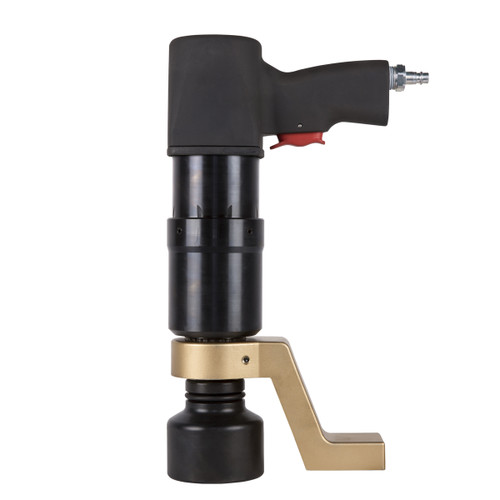
CLS Pneumatic Torque Multipliers are fixed-body pneumatic torque multipliers for controlled tightening and loosening of heavy-duty fastening connections. Mountz offers both single-speed models for higher-speed operation at lower torque ranges and two-speed models with a manual two-speed gearbox for controlled tightening at higher torque ranges. CLS multipliers automatically shut off at the preset torque, provide accuracy better than ±5%, and cover an overall torque range of 44–35,845 lbf.ft (60–48,600 N·m).
Who This Is For
- Manufacturing and assembly operations requiring high torque
- Industrial maintenance teams
- Maintenance technicians
- Field service technicians
- Heavy-duty fastening applications
- Applications where compressed air is available
- Applications requiring controlled pneumatic tightening or loosening
- Applications where single-speed or two-speed operation is appropriate
Mountz describes its pneumatic multipliers as suitable for heavy manufacturing and has documented CLS use in oil-field maintenance and subsea oil-drilling equipment applications.
When Should You Use This?
Use a CLS Pneumatic Torque Multiplier when:
- High-torque fastening is required.
- Compressed air is available.
- Precision tightening or loosening is required.
- Smooth, continuous, non-impacting operation is preferred.
- Automatic shut-off at the preset torque is required.
- A fixed-body pneumatic multiplier configuration suits the application.
- Single-speed or two-speed operation is appropriate.
- The required torque falls within the available CLS ranges.
Mountz specifically positions the CLS for precision tightening and loosening of heavy-duty fastening connections.
When Should You NOT Use This?
A CLS may not be appropriate when:
- Compressed air is unavailable.
- The required torque falls outside the CLS operating range.
- The available compressed air cannot be properly filtered and regulated.
- A suitable reaction point cannot be established.
- A fixed-body pneumatic multiplier does not suit the available working space.
- Another power source or multiplier configuration is required by the application.
Tool selection should be based on the required torque, available air supply, square drive, working space, reaction requirements, and fastening application.
How the CLS Pneumatic Torque Multiplier Works
The CLS uses a pneumatic motor and heavy-duty gearbox to generate controlled high torque. Torque adjustment and control are regulated through the compressed air supply using the Lubro-Control Unit.
During operation:
- Connect the multiplier to the appropriate Lubro-Control Unit.
- Connect the LCU to the compressed air supply.
- Set the air pressure according to the torque output information for the specific CLS model.
- Install the appropriate socket.
- Install and position the reaction device.
- Fully engage the socket with the fastener.
- Position the reaction device against a suitable reaction point.
- Select the required direction of rotation.
- For a two-speed model, select the appropriate gearbox speed.
- Activate the multiplier.
- The tool rotates the fastener smoothly without impact hammering.
- During tightening, the multiplier shuts off when the preset torque is achieved.
Mountz states that all pneumatic torque multipliers are supplied with an air torque output chart and notes that the values are approximate because air supply, joint characteristics, and other application variables can affect torque output.
Result
- Controlled high-torque fastening
- Automatic shut-off
- Smooth, continuous rotation
- Non-impacting operation
- Pneumatic torque control
- Single-speed or two-speed operation, depending on model
Core Features
- Fixed-body pneumatic torque multiplier
- Accuracy better than ±5%
- Precision tightening and loosening
- Single-speed and two-speed configurations
- Automatic shut-off at preset torque
- Smooth, continuous, non-impacting rotation
- Torque adjustment through the Lubro-Control Unit
- Heavy-duty gearbox
- Multiple torque ranges
- Multiple square drive sizes
- Reaction device options
- Air torque output chart supplied with pneumatic multipliers
- Maximum operating sound rating of 78 dB(A)
Configuration Options
CLS Pneumatic Torque Multipliers are available in single-speed and two-speed configurations.
| Configuration | Mountz Description |
|---|---|
| Single Speed | High-speed models with lower torque ranges |
| Two Speed | Manual two-speed gearbox for controlled tightening with higher torque ranges |
The correct configuration depends on the required torque range and desired operating speed.
CLS Single-Speed Models
Single-speed CLS models range from 44–162 lbf.ft (60–220 N·m) at the lower end through 1,180–12,540 lbf.ft (1,600–17,000 N·m) for the CLS1700.
Single-Speed Model Chart
| Model | Item # | American Torque Range | S.I. Torque Range | Square Drive | Speed | Weight |
|---|---|---|---|---|---|---|
| CLS15 | 213030 | 44–162 lbf.ft | 60–220 N·m | 1/2" | 60 RPM | 13.2 lbs |
| CLS15 | 213031 | 44–162 lbf.ft | 60–220 N·m | 3/4" | 60 RPM | 13.2 lbs |
| CLS25 | 213032 | 70–206 lbf.ft | 95–280 N·m | 1/2" | 38 RPM | 14.3 lbs |
| CLS25 | 213033 | 70–206 lbf.ft | 95–280 N·m | 3/4" | 38 RPM | 14.3 lbs |
| CLS35 | 213034 | 99–287 lbf.ft | 135–390 N·m | 3/4" | 34 RPM | 14.3 lbs |
| CLS45 | 213035 | 121–357 lbf.ft | 165–485 N·m | 3/4" | 27 RPM | 14.3 lbs |
| CLS75 | 213036 | 225–660 lbf.ft | 305–895 N·m | 3/4" | 19 RPM | 16.5 lbs |
| CLS95 | 213037 | 269–796 lbf.ft | 365–1,080 N·m | 3/4" | 13 RPM | 16.5 lbs |
| CLS135 | 213038 | 365–1,069 lbf.ft | 495–1,450 N·m | 1" | 9 RPM | 17.6 lbs |
| CLS175 | 213039 | 475–1,401 lbf.ft | 645–1,900 N·m | 1" | 7 RPM | 17.6 lbs |
| CLS255 | 213040 | 671–1,969 lbf.ft | 910–2,670 N·m | 1" | 6 RPM | 19.8 lbs |
| CLS315 | 213041 | 870–2,551 lbf.ft | 1,180–3,460 N·m | 1" | 4 RPM | 19.8 lbs |
| CLS1700 | 213021 | 1,180–12,540 lbf.ft | 1,600–17,000 N·m | 2 1/2" | 1 RPM | 132 lbs |
The CLS15 and CLS25 are each available in two configurations with different square drive sizes while retaining the same torque range and operating speed.
CLS Two-Speed Models
Two-speed CLS models feature a manual two-speed gearbox. Mountz describes this configuration as providing controlled tightening with higher torque ranges.
Two-Speed Model Chart
| Model | Item # | American Torque Range | S.I. Torque Range | Square Drive | Low Speed | High Speed | Weight |
|---|---|---|---|---|---|---|---|
| CLS2/100 | 213001 | 88–830 lbf.ft | 120–1,125 N·m | 3/4" | 12 RPM | 36 RPM | 15 lbs |
| CLS2/100 | 213002 | 88–830 lbf.ft | 120–1,125 N·m | 1" | 12 RPM | 36 RPM | 15 lbs |
| CLS2/150 | 213014 | 125–1,191 lbf.ft | 170–1,615 N·m | 1" | 7 RPM | 21 RPM | 16 lbs |
| CLS2/300 | 213003 | 284–2,651 lbf.ft | 385–3,595 N·m | 1" | 5 RPM | 15 RPM | 20 lbs |
| CLS2/400 | 213004 | 398–3,728 lbf.ft | 540–5,055 N·m | 1 1/2" | 3 RPM | 9 RPM | 24 lbs |
| CLS2/600 | 213006 | 620–5,800 lbf.ft | 840–7,865 N·m | 1 1/2" | 2 RPM | 6 RPM | 33 lbs |
| CLS2/800 | 213008 | 745–6,960 lbf.ft | 1,010–9,435 N·m | 1 1/2" | 1.5 RPM | 5 RPM | 44 lbs |
| CLS2/1000 | 213010 | 866–8,120 lbf.ft | 1,175–11,010 N·m | 1 1/2" | 1 RPM | 4 RPM | 53 lbs |
| CLS2/4800 | 213005 | 3,466–35,845 lbf.ft | 4,700–48,600 N·m | 2 1/2" | 0.3 RPM | 0.6 RPM | 132 lbs |
The CLS2/4800 provides the highest torque capacity in the CLS line at 35,845 lbf.ft (48,600 N·m).
Model Dimensions
Single-Speed Models
| Model | Spline Diameter | D2 | Length |
|---|---|---|---|
| CLS15 | 41 mm | 85 mm | 10 in / 255 mm |
| CLS25 | 41 mm | 85 mm | 10 in / 255 mm |
| CLS35 | 41 mm | 85 mm | 10 in / 255 mm |
| CLS45 | 41 mm | 85 mm | 10 in / 255 mm |
| CLS75 | 41 mm | 85 mm | 10.9 in / 277 mm |
| CLS95 | 41 mm | 85 mm | 10.9 in / 277 mm |
| CLS135 | 54 mm | 85 mm | 11.8 in / 300 mm |
| CLS175 | 54 mm | 85 mm | 11.8 in / 300 mm |
| CLS255 | 54 mm | 85 mm | 13 in / 330 mm |
| CLS315 | 54 mm | 85 mm | 13 in / 330 mm |
| CLS1700 | — | 275 mm | 22.4 in / 570 mm |
Two-Speed Models
| Model | Spline Diameter | D2 | Length |
|---|---|---|---|
| CLS2/100 – 3/4" | 41 mm | 85 mm | 13 in / 330 mm |
| CLS2/100 – 1" | 54 mm | 85 mm | 13 in / 330 mm |
| CLS2/150 | 54 mm | 85 mm | 13 in / 330 mm |
| CLS2/300 | 54 mm | 85 mm | 14.2 in / 360 mm |
| CLS2/400 | 72 mm | 98 mm | 15 in / 380 mm |
| CLS2/600 | 72 mm | 123 mm | 16.1 in / 410 mm |
| CLS2/800 | 72 mm | 148 mm | 16.1 in / 410 mm |
| CLS2/1000 | 91 mm | 173 mm | 16.9 in / 430 mm |
| CLS2/4800 | — | 275 mm | 22.4 in / 570 mm |
Model Selection Guide
| If you need: | Consider |
|---|---|
| Lowest CLS torque range | CLS15 |
| 1/2" square drive | CLS15 or CLS25 |
| Up to 357 lbf.ft | CLS45 or another model whose range includes the target torque |
| Up to 796 lbf.ft | CLS95 or an appropriate two-speed model |
| 1" square drive | Available single- and two-speed models |
| 1 1/2" square drive | CLS2/400 through CLS2/1000 |
| Single-speed operation up to 12,540 lbf.ft | CLS1700 |
| Manual two-speed operation | CLS2 models |
| Maximum CLS torque capacity | CLS2/4800 |
| 2 1/2" square drive | CLS1700 or CLS2/4800 |
When selecting a model, consider:
- Required fastening torque
- Square drive size
- Required operating speed
- Single-speed or two-speed configuration
- Tool dimensions and weight
- Available working space
- Reaction requirements
- Available compressed air supply
Choose a model whose specified torque range includes the required fastening torque.
Single-Speed vs. Two-Speed Operation
Single-Speed CLS
Mountz describes the single-speed CLS models as high-speed tools with lower torque ranges relative to the two-speed CLS configuration.
A single-speed model may be appropriate when:
- The required torque falls within its specified range.
- A single operating speed is appropriate.
- The additional gearbox speed of a two-speed model is not required.
Two-Speed CLS
Two-speed CLS models use a manual two-speed gearbox.
The two available speeds allow the operator to select the appropriate rotational speed for the fastening process. The specific low- and high-speed RPM values depend on the model.
Lubro-Control Unit (LCU)
CLS Pneumatic Torque Multipliers use a Lubro-Control Unit to regulate torque through the compressed air supply.
The LCU provides:
- Filtered compressed air
- Regulated compressed air
- Lubricated compressed air
- Controlled air supply for torque adjustment
Mountz states that all pneumatic torque multipliers should use a high-quality air filter regulator.
The LCU-2 Lubro-Control Unit is identified as a required companion item for current CLS models.
Setting Torque
Torque setting on a CLS is obtained through air pressure. Each pneumatic multiplier is supplied with an air torque output chart.
The operating instructions state that the curves in these charts are approximate. Actual torque output can be affected by:
- Differences in compressed air supply
- Joint characteristics
- Application-related variables
Use the torque information supplied with the specific tool when establishing the required air pressure.
Automatic Shut-Off
CLS Pneumatic Torque Multipliers automatically shut off when the preset torque is achieved.
During tightening:
- Air pressure is set according to the required torque.
- The multiplier rotates the fastener continuously.
- Torque increases as the fastener is tightened.
- The tool shuts off when the preset torque is reached.
The tool applies smooth, continuous rotation rather than impact hammering.
Reaction Devices
A reaction device is used to counteract the rotational force produced by the multiplier.
Mountz documents:
- Reaction Foot
- Reaction Bar
- Reaction Ring
The CLS data sheet states that all models are supplied with a reaction foot except models marked with an asterisk. The CLS1700 and CLS2/4800 are supplied with a reaction ring.
Before operation:
- Install the reaction device securely.
- Establish a stable reaction point.
- Verify that the reaction point can support the generated force.
- Keep hands and body parts clear of the reaction area.
- Inspect the reaction setup before operating the tool.
Setup & Operation
Before operating a CLS Pneumatic Torque Multiplier:
- Determine the required fastening torque.
- Select a CLS model whose range includes the required torque.
- Connect the multiplier to the appropriate Lubro-Control Unit.
- Connect the LCU to the compressed air supply.
- Set the air pressure according to the torque information supplied with the specific tool.
- Install the appropriate socket.
- Install the appropriate reaction device.
- Fully engage the socket with the fastener.
- Position the reaction device against a secure reaction point.
- Select clockwise or counterclockwise rotation as required.
- For two-speed models, select the appropriate gearbox speed.
- Activate the multiplier.
- Allow the tool to rotate continuously during fastening.
- During tightening, allow the multiplier to shut off when the preset torque is reached.
- Release and reposition the tool according to the operating instructions before moving to another fastener.
Follow the Mountz pneumatic multiplier operating instructions and the torque output information supplied with the specific tool.
Accuracy & Torque Control
CLS Pneumatic Torque Multipliers provide accuracy better than ±5%.
Torque is controlled through regulated air pressure rather than through impact action. Because compressed air supply, joint characteristics, and other application variables can affect output, use the supplied torque information and your facility's applicable torque-control procedures.
CLS vs. Hydraulic & Impact Wrenches
Mountz specifically states that the CLS:
- Operates with smooth, continuous rotation rather than impact hammering.
- Is faster and less expensive than a hydraulic wrench.
- Eliminates the cumbersome setup time and slow ratcheting process associated with hydraulic wrenches.
- Eliminates the harmful hammering associated with impact wrenches.
- Eliminates frequent costly repairs associated with impact wrenches.
These are Mountz's stated product comparisons. The appropriate fastening technology should still be selected based on the requirements of the application.
Common Applications
Mountz describes CLS Pneumatic Torque Multipliers for precision tightening and loosening of heavy-duty fastening connections and positions pneumatic multipliers for heavy manufacturing.
Mountz has also documented CLS use in:
- Oil-field maintenance
- Turbomachinery service
- Subsea blowout preventer fastening
- Heavy-duty industrial bolting
Other applications should be evaluated based on torque requirements, square drive, compressed air supply, working space, and reaction requirements rather than assuming suitability based solely on industry.
Common Industries
Based on applications and markets specifically documented by Mountz, CLS Pneumatic Torque Multipliers are applicable to:
- Heavy manufacturing
- Oil & gas
- Industrial maintenance
- Turbomachinery service
Use Cases
Oil-Field Maintenance
Problem: An oil-field maintenance operation was using a hydraulic torque wrench system that required a pump, hydraulic lines, and repeated ratcheting to reach the required torque.
Solution: The operation replaced the hydraulic system with a Mountz CLS Pneumatic Torque Multiplier. The documented application notes the more compact pneumatic setup and automatic shut-off at the required torque.
Subsea Blowout Preventer Fastening
Problem: A valve manufacturer's operation required controlled fastening of hub connections on subsea blowout preventers used under oil-drilling platforms.
Solution: Mountz documents the use of a pneumatic torque multiplier for the fastening application.
Two-Speed High-Torque Fastening
Problem: A fastening application requires a CLS model with both a higher and lower operating speed.
Solution: CLS two-speed models provide a manual two-speed gearbox. Depending on the model, operators can select between the documented high- and low-speed settings while working within the tool's specified torque range.
Extreme High-Torque Fastening
Problem: A heavy-duty fastening application requires torque beyond the capacity of the lower-range CLS models.
Solution: The CLS2/4800 provides a range of 3,466–35,845 lbf.ft (4,700–48,600 N·m) with a 2 1/2-inch square drive.
Maintenance
Follow the Mountz Pneumatic Multipliers Operating Instructions for maintenance and service requirements.
Key practices include:
- Use the appropriate filtered, regulated, and lubricated compressed air supply.
- Inspect the multiplier before operation.
- Inspect air hoses and connections.
- Inspect the square drive and socket.
- Inspect the reaction device.
- Do not use damaged components.
- Follow the applicable operating and service instructions.
- Remove a damaged or improperly functioning tool from service.
Because torque output depends in part on the compressed air supply, proper air preparation is important to the operation of the multiplier.
Compatible Accessories
LCU-2 Lubro-Control Unit
The LCU-2 provides the controlled supply of filtered, regulated, and lubricated compressed air used with the multiplier.
Reaction Devices
Mountz documents the following reaction-device styles:
- Reaction Foot
- Reaction Bar
- Reaction Ring
The required configuration depends on the CLS model and fastening setup.
Retention Rings
Mountz lists retention rings among the accessories for current CLS models.
6-Point Impact Sockets
Mountz lists 6-point impact sockets as accessories for CLS Pneumatic Torque Multipliers. Select a socket compatible with the tool's square drive, fastener, and torque requirements.
Media & Supporting Content
- CLS Pneumatic Torque Multiplier Product Page
- CLS Product Data Sheet
- CLS Operating Instructions
- LCU-2 Lubro-Control Unit
- Reaction Devices
- Impact Sockets
Related Content
- Hand Torque Multipliers
- Electric Torque Multipliers
- Radial Gearing Torque Multipliers
- Guide: Enhancing Quality in Heavy-Duty Manufacturing and Repair with a Torque Multiplier
- Guide: Choosing the Right Torque Multiplier
- Safeguarding Industrial Operations: The Importance of Torque Tools in Large Asset Maintenance
- Mountz Consolidated Tools Sales Bang Sheet
Need Help?
- Contact Applications Engineering for setup guidance
- Speak with Sales for product selection
- Call us:
- North America:(408) 850-9978
- International: +44 1428 741756


 M-F 6am - 5pm PST


