



Quick Answer
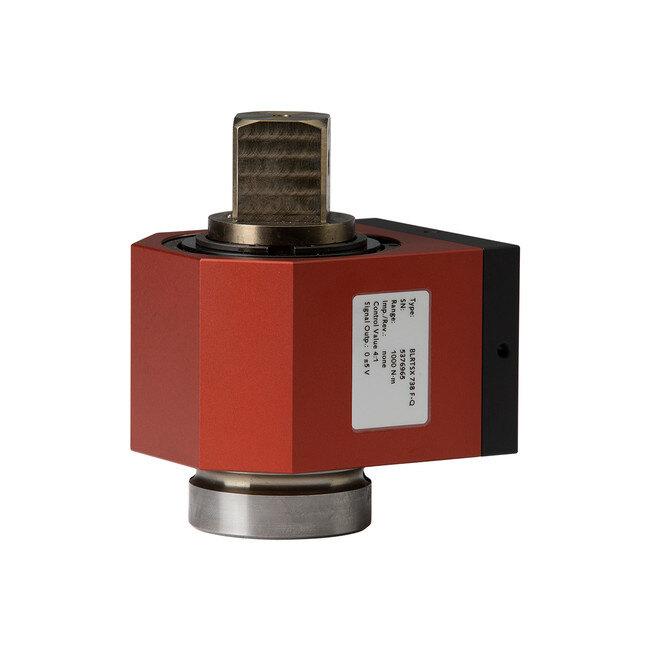
BLRTSX Torque Sensors are rotary torque sensors used with compatible Mountz torque analyzers to measure torque during rotation. They are commonly used for power tool testing, calibration, verification, and quality control applications.
Who This Is For
- Quality engineers and quality assurance teams
- Calibration technicians and metrology laboratories
- Manufacturing and process engineers
- Production and assembly teams
- Maintenance departments
- Facilities performing in-house torque tool calibration
- Companies implementing torque verification programs
When Should You Use This?
Use BLRTSX Torque Sensors when:
- Power tools require calibration or verification
- Rotary torque measurement is needed
- Tool performance must be tested and documented
- Quality programs require accurate torque measurement
- Production tools require routine verification
- Torque data is needed during tool operation
When Should You NOT Use This?
Do not use BLRTSX Torque Sensors when:
- A compatible torque analyzer is not available
- The application does not require rotary torque measurement
- The torque tool exceeds the sensor's rated capacity
- The sensor is not appropriate for the torque range being tested
BLRTSX sensors are designed to be used with compatible Mountz torque analyzers.
How BLRTSX Torque Sensors Work
BLRTSX sensors measure torque while rotating and transfer measurement data to a compatible torque analyzer.
The sensor:
- Measures rotary torque
- Connects to a compatible torque analyzer
- Supports calibration and verification activities
- Provides torque measurement during tool operation
- Helps validate tool performance
Result:
- Improved quality control
- Accurate torque verification
- Better calibration management
- Increased confidence in tool performance
Core Features
- Rotary torque sensor design
- Designed for torque testing and calibration applications
- Compatible with Mountz torque analyzers
- Suitable for power tool verification
- Available in multiple torque capacities
- Supports quality control and calibration programs
Configuration Options
Torque Range Selection
BLRTSX sensors are available in multiple torque capacities to support a variety of torque testing applications.
Analyzer Compatibility
BLRTSX sensors are designed for use with compatible Mountz torque analyzers.
Application Flexibility
BLRTSX sensors can be used for power tool testing, calibration, verification, and quality control applications.
Understanding BLRTSX Torque Sensors
What is a BLRTSX Torque Sensor?
BLRTSX sensors are rotary torque sensors designed to measure torque while rotating.
This allows users to evaluate torque output during tool operation and verify tool performance.
Why Use a BLRTSX Sensor?
BLRTSX sensors are commonly used when accurate rotary torque measurement is required for:
- Power tool testing
- Torque verification
- Calibration applications
- Quality control inspections
- Production tool audits
What Are the Benefits of BLRTSX Sensors?
- Accurate rotary torque measurement
- Suitable for power tool verification
- Multiple torque capacities available
- Compatible with Mountz torque analyzers
- Supports calibration and quality programs
Result:
- Improved process consistency
- Better tool verification
- Enhanced quality control
- Greater confidence in torque measurements
Available Models
The BLRTSX Series includes brushless rotary torque sensors designed for torque verification, calibration, and auditing of power tools. Models are available with either hex or square drive connections and cover torque ranges from 10 ozf.in to 738 lbf.ft (7 cN·m to 1000 N·m). All models feature ARC II auto-recognition technology and are compatible with Mountz LTT and PTT Torque Analyzers.
Model Selection Guide
Need ultra-low torque measurement for precision screwdrivers?
Choose:
- BLRTSX70z-H
- BLRTSX140z-H
These models are ideal for electronics, medical device assembly, and other micro-torque applications.
Need low- to medium-torque rotary measurement?
Choose:
- BLRTSX18i-H
- BLRTSX50i-H
- BLRTSX100i-H
- BLRTSX160i-H
These models feature 1/4" male hex input and 1/4" female hex output for hex-drive applications.
Need square drive rotary torque measurement?
Choose:
- BLRTSX50i
- BLRTSX100i
- BLRTSX160i
These models use 1/4" square drive connections and are commonly used for torque-controlled screwdrivers and production tooling.
Need higher-capacity rotary torque measurement for power tools?
Choose:
- BLRTSX18F
- BLRTSX36F
- BLRTSX73F
- BLRTSX118F
- BLRTSX184F
- BLRTSX368F
- BLRTSX738F
These models cover torque ranges from 2.5 N·m to 1000 N·m and support a wide variety of production and calibration applications.
BLRTSX Models
| Model | Item Number | Torque Range (American) | Torque Range (Metric) | Input Drive | Output Drive |
|---|---|---|---|---|---|
| BLRTSX70z-H | 170226 | 10–70 ozf.in | 7–49 cN·m | 1/4" Male Hex | 1/4" Female Hex |
| BLRTSX140z-H | 170227 | 25–140 ozf.in | 18–98.8 cN·m | 1/4" Male Hex | 1/4" Female Hex |
| BLRTSX18i-H | 170228 | 2–18 lbf.in | 22.5–203 cN·m | 1/4" Male Hex | 1/4" Female Hex |
| BLRTSX50i-H | 170229 | 5–50 lbf.in | 56.5–565 cN·m | 1/4" Male Hex | 1/4" Female Hex |
| BLRTSX50i | 170230 | 5–50 lbf.in | 56.5–565 cN·m | 1/4" Female Square | 1/4" Male Square |
| BLRTSX100i-H | 170231 | 10–100 lbf.in | 113–1130 cN·m | 1/4" Male Hex | 1/4" Female Hex |
| BLRTSX100i | 170232 | 10–100 lbf.in | 113–1130 cN·m | 1/4" Female Square | 1/4" Male Square |
| BLRTSX160i-H | 170233 | 16–160 lbf.in | 180–1807 cN·m | 1/4" Male Hex | 1/4" Female Hex |
| BLRTSX160i | 170234 | 16–160 lbf.in | 180–1807 cN·m | 1/4" Female Square | 1/4" Male Square |
| BLRTSX18F | 170235 | 2–18 lbf.ft | 2.5–25 N·m | 3/8" Female Square | 3/8" Male Square |
| BLRTSX36F | 170236 | 4–36 lbf.ft | 5–50 N·m | 3/8" Female Square | 3/8" Male Square |
| BLRTSX73F | 170237 | 8–73 lbf.ft | 10–100 N·m | 1/2" Female Square | 1/2" Male Square |
| BLRTSX118F | 170238 | 12–118 lbf.ft | 16–160 N·m | 1/2" Female Square | 1/2" Male Square |
| BLRTSX184F | 170239 | 19–184 lbf.ft | 25–250 N·m | 3/4" Female Square | 3/4" Male Square |
| BLRTSX368F | 170240 | 37–368 lbf.ft | 50–500 N·m | 3/4" Female Square | 3/4" Male Square |
| BLRTSX738F | 170241 | 74–738 lbf.ft | 100–1000 N·m | 1" Female Square | 1" Male Square |
Choosing the Right BLRTSX Sensor
Consider the following when selecting a BLRTSX model:
- What is the maximum torque that will be measured?
- Does the application require hex or square drive connections?
- Is the sensor being used with compatible Mountz LTT or PTT Torque Analyzers?
- Will the sensor be used for power tool verification, calibration, or production quality audits?
- Is additional measurement range needed for future applications?
Selecting a sensor with a torque range that closely matches the application's normal operating torque provides the best measurement resolution and accuracy.
Setup & Adjustment
To use a BLRTSX Torque Sensor:
- Connect the BLRTSX sensor to a compatible Mountz LTT or PTT Torque Analyzer.
- Verify all mechanical and cable connections before testing.
- Install the appropriate drive adapters or tooling for the application.
- Allow ARC II technology to automatically recognize and load the sensor calibration information.
- Perform torque verification or calibration while the sensor rotates with the tool.
- Review and record measurement results using the connected torque analyzer.
BLRTSX sensors are supplied with an ISO 17025 Certificate of Calibration and provide a system accuracy of ±0.5% of reading from 20–100% of full scale and ±1% from 10–20% of full scale when used with a compatible Mountz LTT or PTT Torque Analyzer.
Use Cases (Real-World Examples)
1. Power Tool Verification
Problem: Production tools require routine performance verification.
Solution: BLRTSX sensors provide rotary torque measurement for tool testing and validation.
2. Calibration Programs
Problem: Torque tools require regular calibration checks.
Solution: BLRTSX sensors support calibration and verification activities.
3. Quality Control
Problem: Tool performance must be monitored and documented.
Solution: BLRTSX sensors provide accurate torque measurements for quality programs.
4. Manufacturing Operations
Problem: Consistent torque output is required for assembly applications.
Solution: BLRTSX sensors help verify that tools are performing within specification.
Troubleshooting
Issue 1: No torque reading displayed
Cause: Sensor is not connected to a compatible analyzer.
Solution: Verify analyzer connection and sensor recognition.
Issue 2: Inaccurate readings
Cause: Sensor capacity may not match the application.
Solution: Verify that the selected sensor is appropriate for the torque range being tested.
Issue 3: Inconsistent measurements
Cause: Improper setup or installation.
Solution: Verify sensor installation and test setup.
Issue 4: Tool verification results vary
Cause: Application setup or testing method may need review.
Solution: Verify testing procedures and operating instructions.
Calibration & Standards
- Designed for torque calibration and verification applications
- Supports quality control programs
- Used for testing and validating torque tool performance
- Suitable for manufacturing and calibration environments
Refer to the BLRTSX datasheet for model-specific specifications and accuracy information.
Integration / Advanced Notes
- Designed for use with compatible Mountz torque analyzers
- Supports rotary torque measurement applications
- Used for calibration, verification, and quality control activities
- Available in multiple torque capacities
- Requires analyzer connection for operation
Media & Supporting Content
.jpg?width=650&height=650&name=blrtsx36fa-170254_01.mainview%20(1).jpg)
Related Articles / Content
- Mountz Torque Measurement Digital Catalog
- Mountz Torque Analyzers & Sensors Bang Sheet
- Enhancing Quality Control and Minimizing Rejections through Torque Measurement Across Three Assembly Facets
- Maintaining Precision in Torque Tools: A Comprehensive Guide
- Webinar: Tips for Selecting a Torque Sensor
Need Help?
- Contact Applications Engineering for setup guidance
- Speak with Sales for product selection
- Call us:
- North America:(408) 850-9978
- International: +44 1428 741756


 M-F 6am - 5pm PST


