



Quick Answer
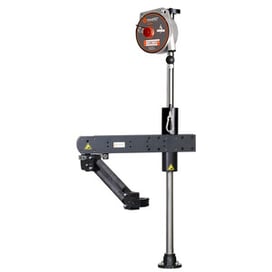
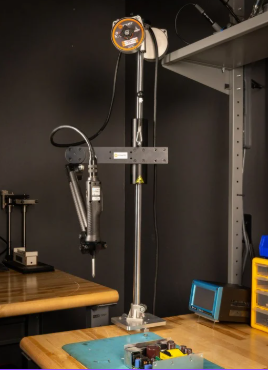
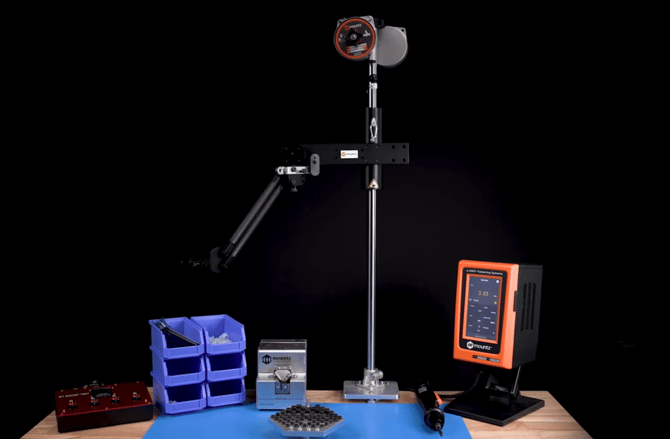
ATS-Series torque arms support assembly tools and absorb torque reaction, using an articulated arm design to provide flexible positioning and improved ergonomics.
Who This Is For
- Manufacturing engineers
- Process engineers
- Quality engineers
- Assembly operators
- Ergonomics and safety teams
- Automotive, aerospace, electronics, and general manufacturing facilities
When Should You Use This?
Use ATS-Series torque arms when:
- Torque reaction from power tools needs to be managed
- Operator ergonomics is a concern
- Applications involve repetitive fastening
- Flexible, multi-directional positioning is required
- Maintaining proper tool alignment is important
When Should You NOT Use This?
Do not use ATS-Series if:
- Tool support is not required
- Workspace does not allow mounting
- A fixed, non-adjustable setup is preferred
- Vertical tool balancing is the primary requirement
How ATS-Series Torque Arms Work
ATS-Series torque arms support assembly tools through an articulated arm structure:
- Tool is mounted to the arm
- Arm absorbs torque reaction generated during fastening
- Articulated joints allow positioning in multiple directions
- Arm helps maintain perpendicular alignment to the fastener
- Operator guides the tool with supported movement
Result:
- Improved ergonomics, reduced operator strain, and more consistent tool positioning
Core Features
- Articulated arm design for multi-directional positioning
- Absorbs torque reaction from electric and pneumatic assembly tools
- Supports proper tool alignment to reduce side loading
- Helps prevent cross-threading during fastening
- Improves workstation ergonomics and operator comfort
- Compact design for small work cells
- Easily reconfigured for changing production requirements
- Includes integrated tool balancer(s), depending on model
Configuration Options
- Multi-directional articulated arm positioning
- Bench, wall, and rail mounting options
- Compatible with a variety of tool holders and clamps
- Tool clamp can be configured for in-line, pistol grip, and right-angle power tools
- Includes integrated tool balancer(s), depending on model
Available Models (ATS-Series Articulated Torque Arms)
The ATS-Series is available in multiple torque capacities to support ergonomic fastening applications requiring flexible, multi-directional positioning. Each model is designed to absorb torque reaction while improving operator comfort and maintaining proper tool alignment.ATS-Series Model Chart
| Model | Item Number | Max Torque | Clamp Diameter | Arm Reach | Max Tool Weight |
|---|---|---|---|---|---|
| ATS-15 | 260600 | 11 lbf.ft (15 N·m) | 1"–1¾" | 19"–23.6" | 6.2 lbs |
| ATS-25 | 260601 | 18.4 lbf.ft (25 N·m) | 1"–2¼" | 21"–23.6"* | 5.5 lbs |
| ATS-40 | 260602 | 29.5 lbf.ft (40 N·m) | 1"–2¼" | 23"–29.2"* | 8.5 lbs |
| ATS-80 | 260603 | 59 lbf.ft (80 N·m) | 1"–2¼" | 22"–28.6"* | 11 lbs |
*ATS-25, ATS-40, and ATS-80 models feature three preset arm-angle positions (0°, 22.5°, and 45°) to accommodate larger tools and varying workstation layouts.
Model Selection Guide
| If you need... | Recommended Model |
|---|---|
| Small precision assembly tools | ATS-15 |
| Light-duty fastening applications | ATS-25 |
| Medium-duty assembly tools | ATS-40 |
| Highest torque capacity | ATS-80 |
| Maximum positioning flexibility | ATS-25, ATS-40, or ATS-80 |
| Compact workstations with limited space | Any ATS model |
Compatibility Notes
- Compatible with electric and pneumatic assembly tools.
- Tool clamp orientation can be configured for in-line, pistol grip, and right-angle tools.
- Mountable to workbenches, walls, or rail systems using the appropriate mounting hardware.
- Each ATS model includes the appropriate tool balancer(s) for its intended application. ATS-15, ATS-25, and ATS-80 include two balancers, while the ATS-40 includes one medium-sized balancer.
Construction
- Steel column with a polished chrome finish.
- ATS-15 features an industrial-grade thermoplastic support slider with integrated steel bearings for lower-torque applications.
- ATS-25, ATS-40, and ATS-80 feature an aluminum support slider with steel bearings for smooth vertical movement.
- ATS-25, ATS-40, and ATS-80 models feature articulated arms manufactured from 7000-series aluminum wrapped in multi-directional carbon fiber for increased torsional strength and a high strength-to-weight ratio.
- Aluminum tool balancers feature braided cables with adjustable spring tension and integrated locking mechanisms for safe operation.
Setup & Adjustment
- Securely mount the ATS-Series torque arm to a compatible bench, wall, or rail mounting system.
- Install the appropriate tool holder or clamp for the assembly tool.
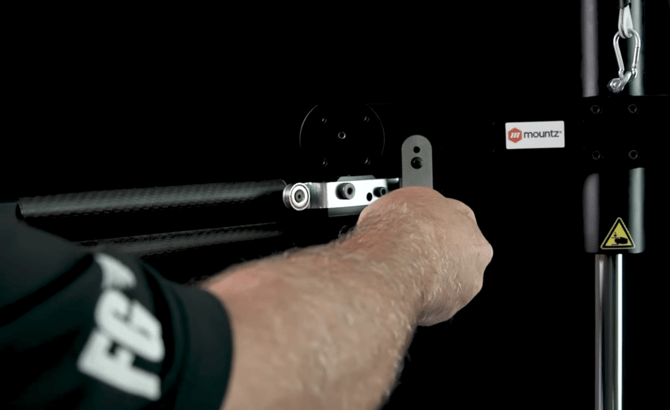
- Adjust the articulated arm joints to achieve the desired working position.
- Configure the tool clamp orientation for in-line, pistol grip, or right-angle tools as needed.
- Verify smooth movement throughout the arm's full range of motion.
- Check that all mounting hardware, joints, clamps, and balancers are securely fastened before beginning production.
Common Applications
ATS-Series torque arms are commonly used in:
- Electronics assembly
- Medical device manufacturing
- Aerospace assembly
- Automotive manufacturing
- General industrial assembly
- Compact production workstations
- Multi-directional fastening applications
- Mechanical system requiring no electrical power or electronic controls.
Use Cases (Real-World Examples)
General Assembly
- Problem: Tool movement creates inconsistent alignment
- Solution: Articulated arm supports consistent positioning and alignment
Electronics Assembly
- Problem: Improper tool angle leads to cross-threading
- Solution: Torque arm helps maintain perpendicular alignment
Production Workstations
- Problem: Operator fatigue from managing tool reaction forces
- Solution: Arm absorbs torque reaction and reduces strain
Maintenance
- No calibration is required.
- Periodically inspect the arm, joints, balancers, and mounting hardware for wear or damage.
- Verify that all fasteners, clamps, and pivot points remain secure before use.
- Adjust tool balancer tension as needed to accommodate changes in tool weight.
Integration & Advanced Notes
- Compatible with electric and pneumatic assembly tools.
- Integrates with compatible tool holders, clamps, and balancers.
- Designed for manual production workstations and ergonomic assembly cells.
- Mechanical system requiring no electrical power or electronic controls.
Media & Supporting Content
- Quick Start Setup Guide Video: ATS-Series Articulated Torque Arm
- Video: Mountz New ATS-Series Articulated Torque Arms
Related Content /Articles
- ATS-Series Articulated Torque Arm Product Page
- ATS-Series Articulated Torque Arm Data Sheet
- Webinar: How to Select an Ergonomic Torque Arm Solution to Reduce Workers’ Comp Liability
- Torque Arm Product Catalog
- How to Choose a Torque Arm Solution
- Webinar: How to Select an Ergonomic Torque Arm Solution
- Mountz REBA-Informed Ergonomic Risk Scale for Fastening Applications
Need Help?
- Contact Applications Engineering for setup guidance
- Speak with Sales for product selection
- Call us:
- North America:(408) 850-9978
- International: +44 1428 741756


 M-F 6am - 5pm PST


